

Workshop Power-Up: 5 Maker Station Essentials For Your Workbench
Building a capable maker station doesn’t require a five-figure budget. The best maker station essentials share a common trait: they solve real problems without collecting dust after the first project. Still, most workshop wishlists read like random impulse buys—a tool here, a gadget there, no cohesion. That approach leaves gaps in your workflow and money on the table.
These five picks work differently. Each one covers a distinct stage of the prototyping-to-repair pipeline: fabrication, assembly, diagnostics, fastening, and precision disassembly. Together, they form an integrated toolkit that handles everything from a first 3D print to a stubborn PCB repair. If you’re shopping for a maker—or leveling up your own bench—this is the system that fills the gaps.
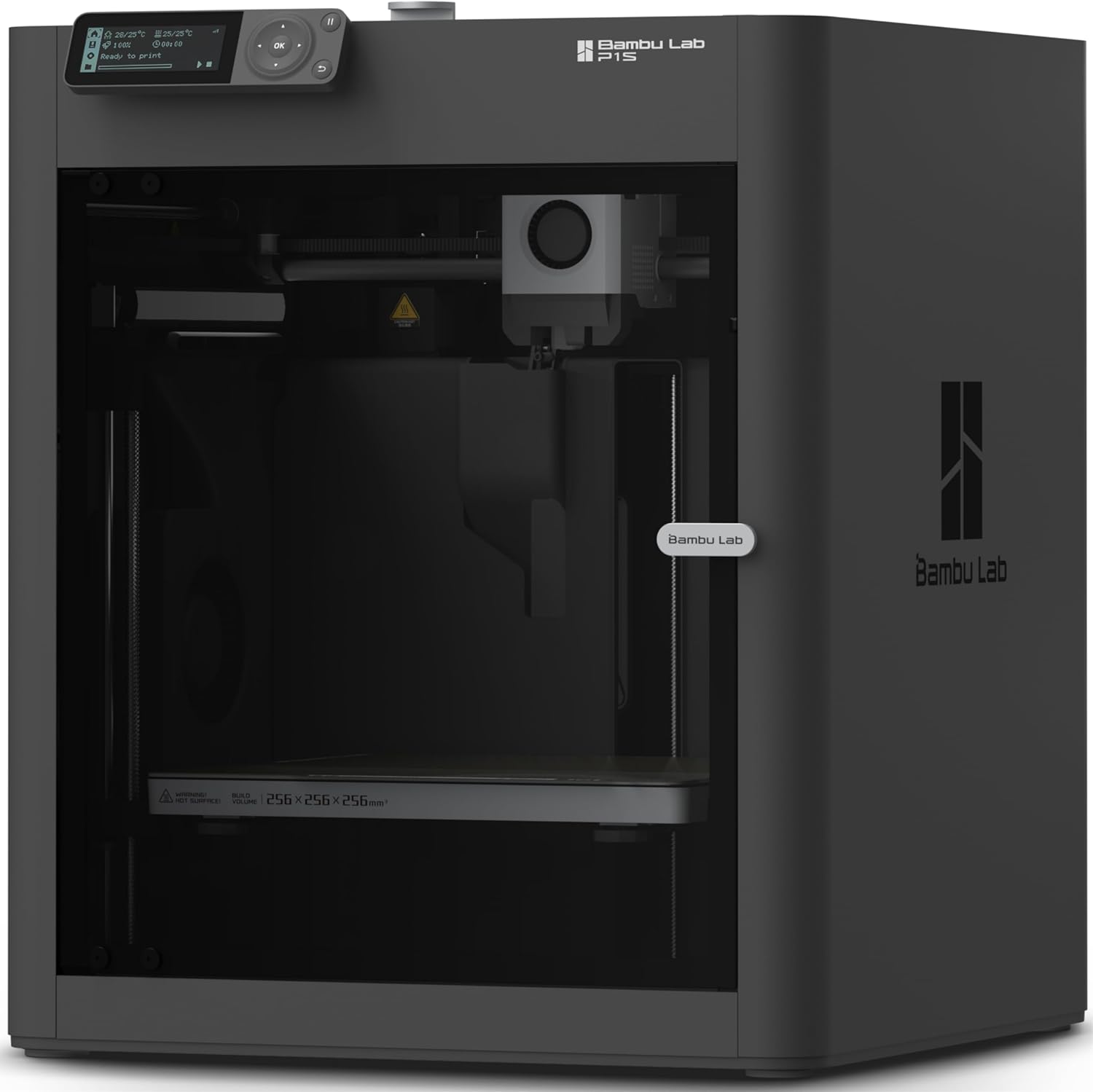
1. Bambu Lab P1S 3D Printer — The Enclosed Maker Station Essential That Handles Any Filament
The Logic:
Open-frame printers work fine until you try ABS, ASA, or nylon—then warping and fumes remind you why enclosures exist. The Bambu Lab P1S solves both problems with a fully enclosed CoreXY design, an activated carbon filter, and auto-calibration that handles bed leveling, vibration compensation, and flow dynamics without manual input. That said, the P1S ships without an AMS, so multi-color printing requires a separate purchase that pushes the total cost up significantly. For single-material prototyping and high-temp functional parts, though, the enclosed chamber and 500 mm/s top speed make it the most versatile printer in this price tier.
The Build:
- CoreXY motion system: 500 mm/s max speed, 20,000 mm/s² acceleration
- Build volume: 256 × 256 × 256 mm
- Fully enclosed chamber with activated carbon air filter
- All-metal hotend with 300°C max nozzle temperature
- Direct-drive extruder with auto bed leveling and vibration compensation
Your first ABS print without cracked layers or a headache from fumes—that’s when the enclosure pays for itself.
Check availability on the Bambu Lab P1S 3D Printer
2. Fanttik T1 Max Soldering Iron Kit — Workshop Tool That Heats in Seconds

The Logic:
Waiting ninety seconds for a soldering iron to reach temperature sounds trivial until you’re mid-repair and the clock is running. The Fanttik T1 Max hits working temperature in roughly three seconds, thanks to its PD-powered direct-heating element. On the other hand, the kit’s included tips lean toward fine-pitch electronics work—larger gauge wire or heavy ground planes will benefit from aftermarket chisel tips. As a result, it’s best suited for PCB rework, sensor wiring, and the kind of precision joints that make or break a project.
The Build:
- Heating time: ~3 seconds to working temperature
- Temperature range: 200–450°C with digital display
- USB-C PD powered (65W compatible)
- Includes carrying case, solder wire, and interchangeable tips
Three-second heat-up means the iron is ready before your excuses kick in.
Check availability on the Fanttik T1 Max Soldering Iron Kit
3. iFixit Pro Tech Toolkit — Precision Teardown Kit for Every Maker Station

The Logic:
Most electronics kits include thirty bits you’ll never touch and skip the three you actually need. iFixit built their Pro Tech Toolkit around real repair data, so the bit selection covers everything from pentalobe screws on laptops to tri-wing fasteners on game consoles. The trade-off is price: at roughly $75, it costs more than a generic 120-piece kit from the bargain bin. In practice, the S2 steel bits and machined driver handle justify the premium every time a cheap bit strips a screw head.
The Build:
- 64 S2 steel precision bits (4 mm hex shank)
- Machined aluminum driver handle with swivel top
- Anti-static wrist strap and flexible extension included
- Nylon spudgers, suction cup, and metal pry tools
- Organized in a zippered, portable roll-up case
Stripped screws and snapped plastic tabs are just memories of the toolkit you should have bought first.
Check availability on the iFixit Pro Tech Toolkit
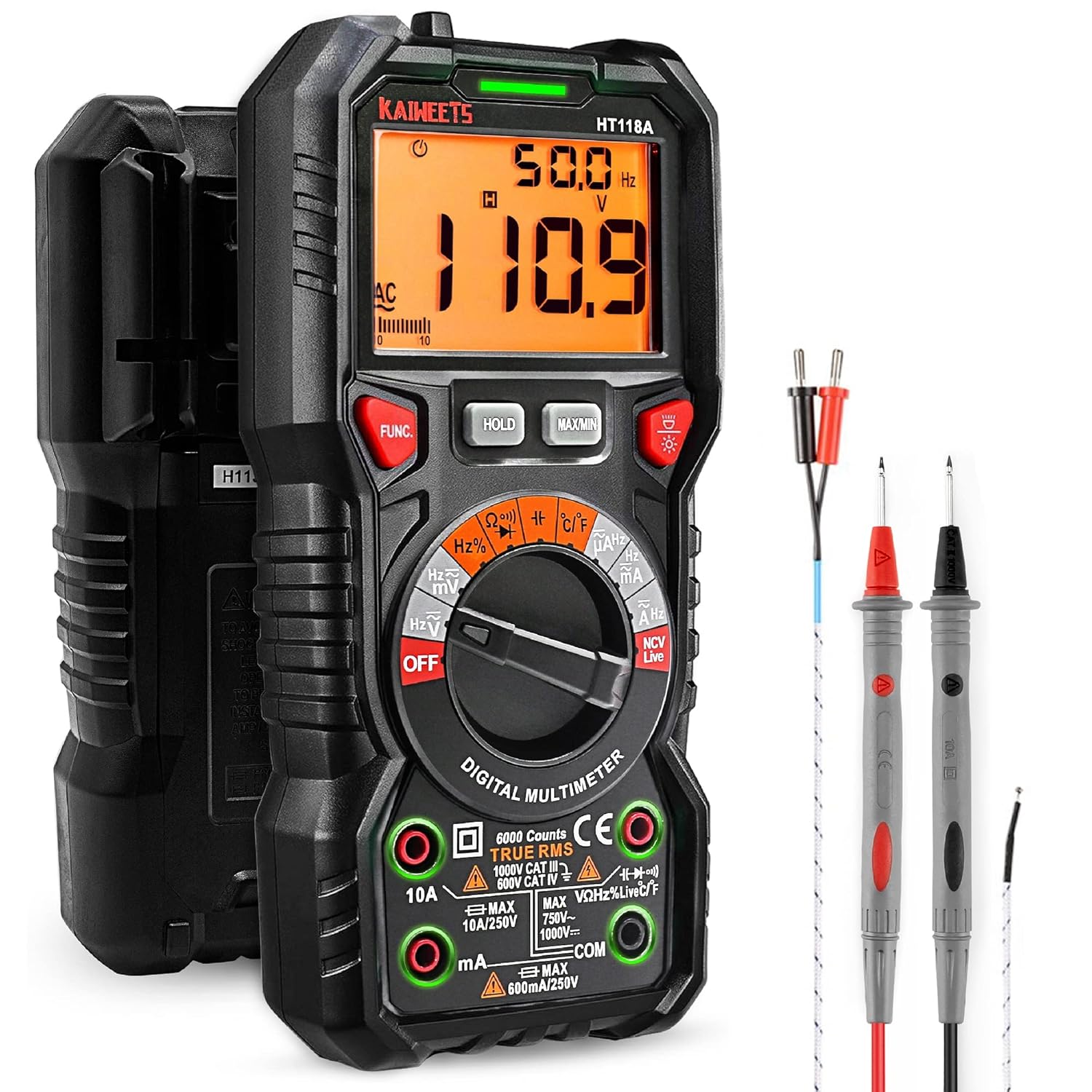
4. KAIWEETS Digital Multimeter HT118A — The Diagnostic DIY Maker Gift That Pays for Itself
The Logic:
A multimeter is the diagnostic backbone of any maker station, and skipping one is like building furniture without a tape measure. The KAIWEETS HT118A delivers true RMS readings, auto-ranging, and a backlit display—features that used to cost three times this price point. That said, the CAT III 600V rating means it’s designed for bench electronics and household circuits, not industrial panel work. For prototyping, Arduino projects, and basic troubleshooting, it covers every common use case without overcomplicating the interface.
The Build:
- True RMS measurement with 6000-count display
- Auto-ranging across voltage, current, resistance, capacitance, and frequency
- CAT III 600V safety rated
- Built-in NCV (non-contact voltage) detector with LED alert
- Backlit LCD and data hold function
Nobody brags about owning a multimeter—until the moment it saves a $200 component from a wiring mistake.
Check availability on the KAIWEETS Digital Multimeter HT118A
5. Wera Kraftform Kompakt Turbo Screwdriver Set — Fast-Fastening Precision for Any Workshop

The Logic:
Hand-driving dozens of fasteners during an enclosure build turns tedious fast. Wera’s Rapidaptor quick-release chuck and ratcheting mechanism let you swap bits and drive screws without breaking your grip or reaching for a drill. More importantly, the Kraftform handle uses a hardness-zone design that transfers torque efficiently without hot spots on your palm. The downside: the included bit set favors metric and European fastener profiles, so you may need to supplement with SAE-specific bits for older American hardware.
The Build:
- Rapidaptor quick-release bit holder with ratcheting mechanism
- Kraftform Plus handle with hardness-zone ergonomics
- Includes Phillips, Pozidriv, Torx, hex, and slotted bits
- Compact pouch for belt or drawer storage
Sixty fasteners into an enclosure build, your wrist will thank you for choosing a ratchet over raw stubbornness.
Check availability on the Wera Kraftform Kompakt Turbo Screwdriver Set
The Bottom Line
A capable workshop isn’t built by chasing the most expensive tool in every category. These five maker station essentials cover the full prototyping pipeline: the Bambu Lab P1S handles fabrication with an enclosed chamber that won’t flinch at high-temp filaments, the Fanttik T1 Max tackles assembly and rework, the KAIWEETS HT118A provides diagnostics, the iFixit toolkit manages teardowns, and the Wera set drives final assembly home. Each one fills a distinct gap, so nothing overlaps and nothing gets left to guesswork.
That’s the real advantage of buying tools as a system rather than a shopping list. When every piece in the chain works, you spend less time hunting for the right instrument and more time actually building. Whether you’re outfitting your own bench or gifting a maker who’s ready to level up, start with infrastructure—the projects will follow.

